
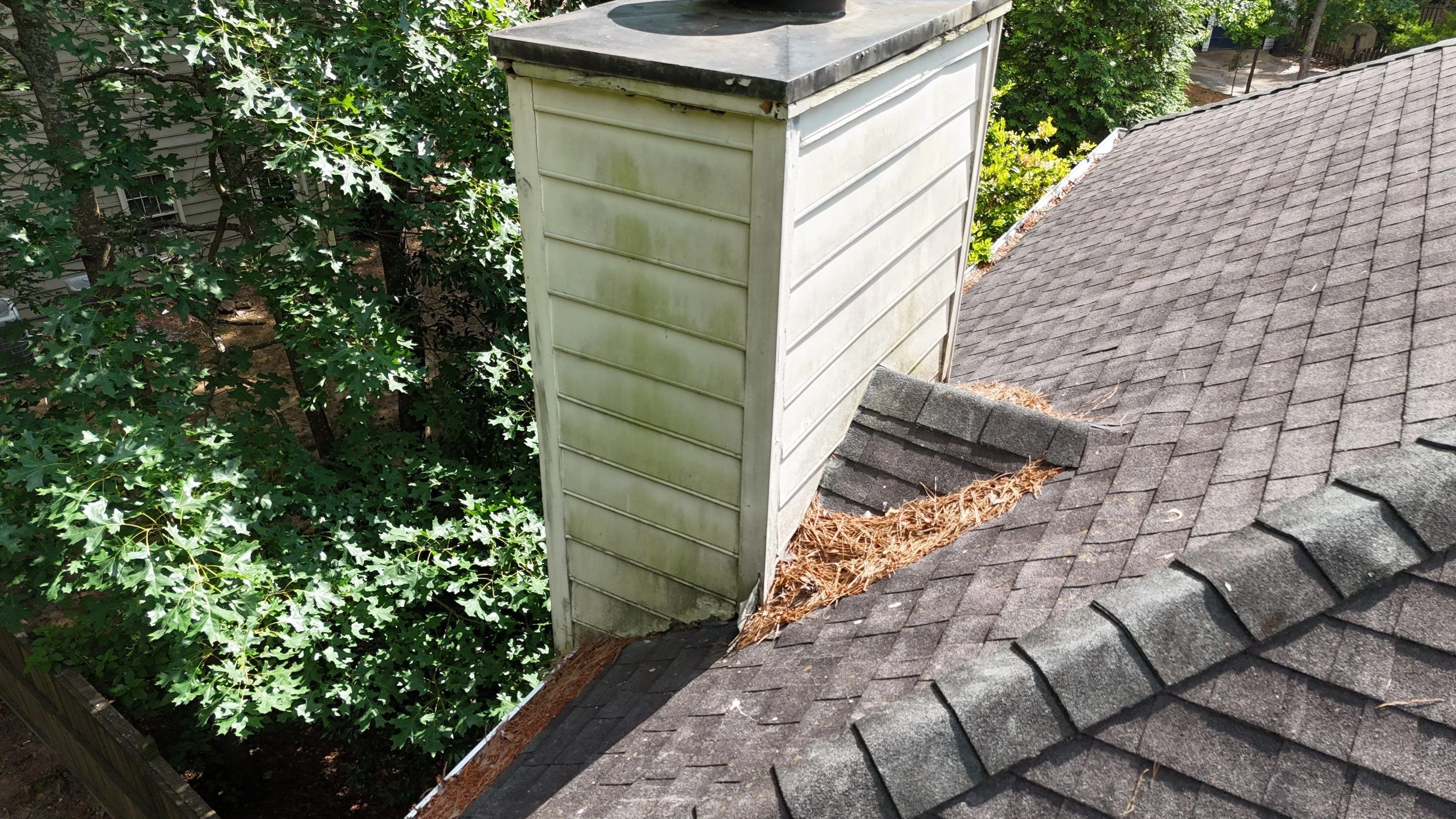
There is a lot happening on your roof that you never see from the ground. If your home is surrounded by mature trees, every fall season sets in motion a slow-building threat that most homeowners overlook until it becomes a costly problem. Leaves, pine straw, pine cones, seed pods, and other organic material shed by trees do not just fall to the ground. Wind carries them onto your roof, where they collect in valleys, stack up against chimney stacks and flashing, and pack tightly into gutters. Over time, what looks like a harmless layer of yard waste becomes one of the leading causes of premature roof damage.
Here is what that buildup is actually doing to your roof.
Mature trees are the primary source. As fall arrives and trees begin shedding, the debris volume is substantial. Pine straw, dried leaves, cones, and broken twigs travel surprisingly far on a light breeze, and low-slope roof sections, roof valleys, and areas surrounding chimneys act as natural collection points. Because these areas are out of sight, the accumulation often goes unnoticed for an entire season or longer.
By the time winter arrives, many North Georgia roofs are already carrying a significant debris load, sitting wet and compressed through months of rain, frost, and limited sunlight.
When debris accumulates on a flat or low-slope section of roof, it holds moisture against the roofing surface. Water that should drain away instead sits. Asphalt shingles are designed to shed water quickly; extended saturation accelerates their breakdown. More concerning, this ponding can force water under shingle edges and around flashing seams, creating leaks that are not immediately visible inside the home. By the time a ceiling stain appears, the underlying damage has often been progressing for months.
Moss and algae require two things to take hold: organic material and sustained moisture. Debris buildup provides both. When a layer of leaves or pine straw blocks direct sunlight from reaching sections of the roof, those areas stay damp far longer than they should. Over time, moss and algae begin to grow in these shaded, perpetually moist zones.
This is more than a cosmetic issue. Moss roots penetrate shingle surfaces, gradually lifting their edges and compromising the seal between courses. Algae feeds on the limestone filler in asphalt shingles, accelerating granule loss and surface degradation.
Gutters exist for one reason: to move water away from your home efficiently. When debris fills gutters and downspouts, that system fails. Water backs up, overflows along the roofline, and saturates the fascia and soffit behind it. The wood decking beneath the roof edge is particularly vulnerable, and rot can set in quickly once that decking stays wet.
Overflowing gutters also direct water toward your foundation and siding rather than away from the structure. What begins as a debris clog can lead to water damage on multiple levels of your home simultaneously.
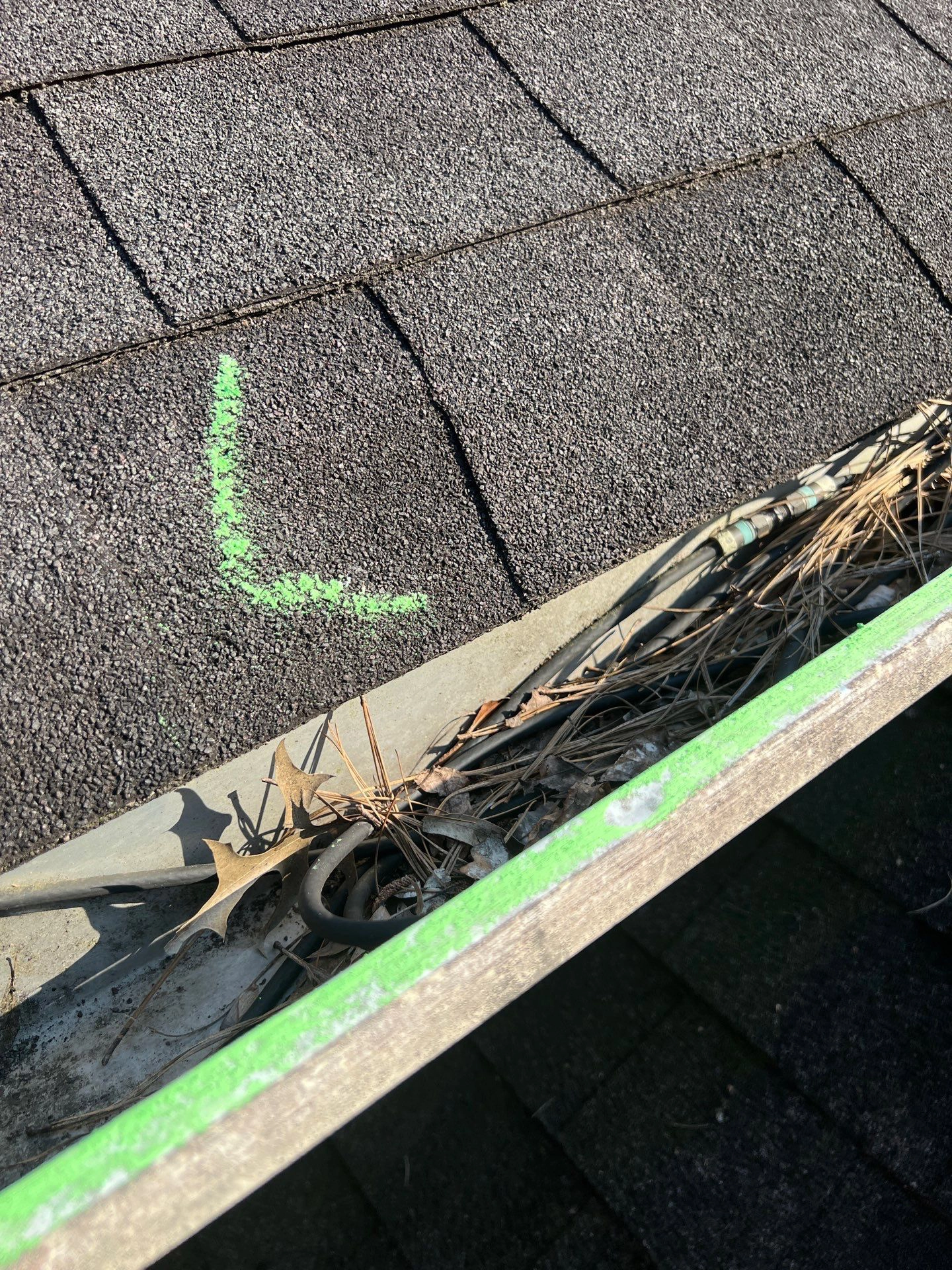
Organic material breaks down over time. As it decomposes against your shingles, it releases acids that attack the surface of asphalt. The granules embedded in shingles serve as a UV-protective layer; acid exposure and physical abrasion from debris speed up granule loss. Once granule coverage is compromised, the underlying mat is exposed to direct sunlight and thermal cycling, accelerating the aging process well ahead of the shingle's intended service life.
Shingles that should last 25 to 30 years can lose years of that lifespan from debris-related wear alone.
The period following fall leaf drop is when roofs are most at risk. Temperatures drop, sunlight hours shorten, and moisture lingers on roofing surfaces far longer than it does in warmer months. Any debris that has accumulated over the fall is now sitting wet through extended periods with little opportunity to dry out.
Annual roof maintenance performed in late fall or early winter addresses this before the damage compounds. This includes clearing debris from valleys, corners, and areas around chimney stacks and flashing, as well as a full gutter cleaning to restore proper drainage. These are not complex tasks, but they require getting on the roof safely and inspecting what you find, which is where a professional inspection adds real value.
Your roof is one of the most consistently stressed components of your home. It absorbs UV exposure, thermal expansion and contraction, wind uplift, and moisture cycling every single day. Without periodic inspection, small problems do not stay small.
A professional roof inspection catches what debris buildup conceals: compromised flashing, lifted shingle edges, early signs of moisture intrusion at penetrations, and granule loss that indicates accelerated aging. Identifying these conditions early means repairs are minor. Discovering them after two or three seasons of compounding damage means the scope and cost of that work increases significantly.
At Douglas Construction, we recommend annual roof inspections for every home, particularly those with mature tree coverage in the greater Atlanta area and surrounding North Georgia markets. If your roof has not been inspected since last winter, or if you are not sure when it was last looked at, now is the right time to schedule a complimentary inspection before another season of debris accumulation takes its toll.
Contact Douglas Construction today to schedule your complimentary roof inspection.
Call us at 833-895-7663 or complete our online form, and a team member will be in touch within 24 hours.
Book online via our calendar